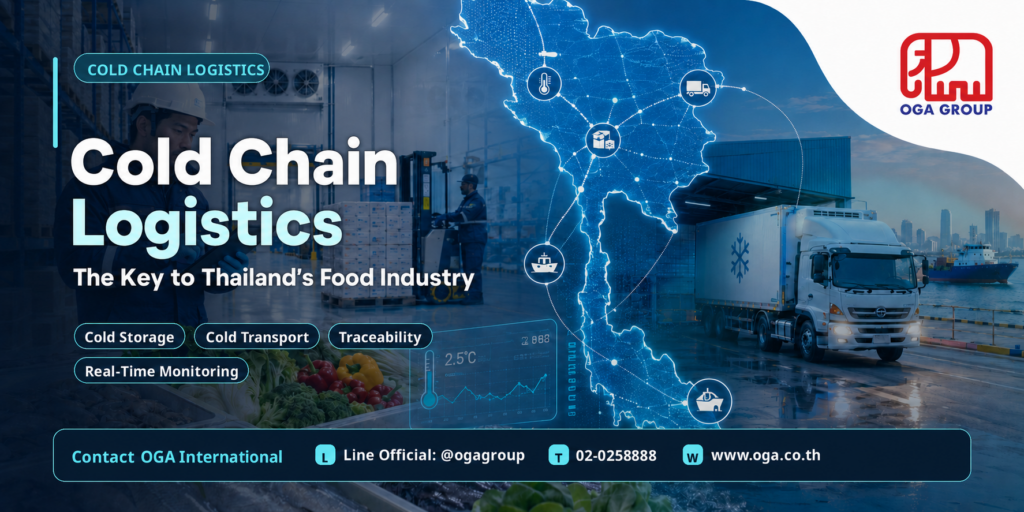
In the food industry, quality and safety are essential. Fresh food, seafood, fruits, vegetables, frozen products, and ready-to-eat meals can quickly lose value if temperature is not controlled properly. This can lead to food spoilage, contamination, higher waste, and lower customer confidence.
This is why Cold Chain Logistics in Thailand has become an important part of the food supply chain. It connects every step, from production and storage to transportation and delivery, while keeping products at the right temperature.
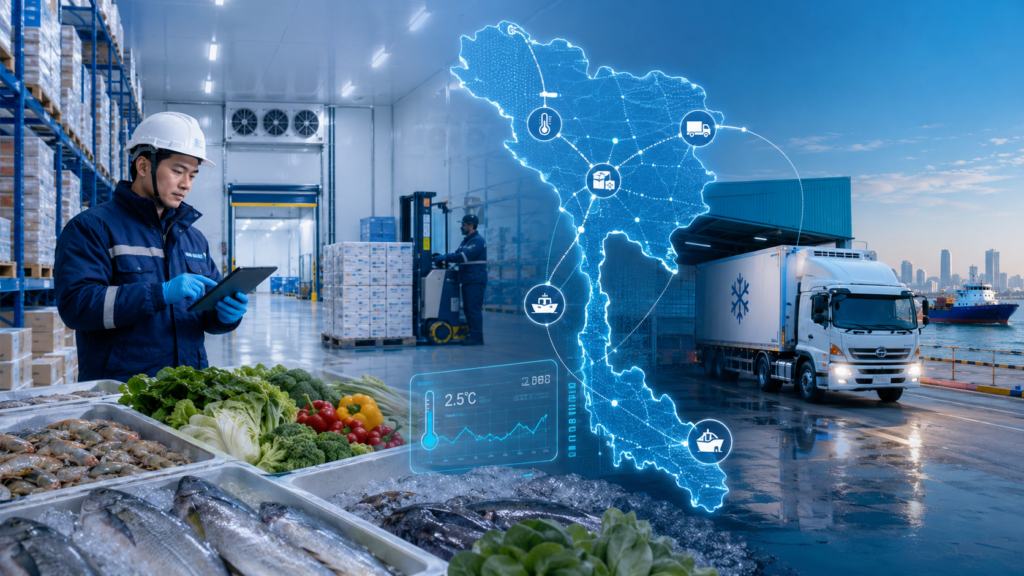
What Is Cold Chain Logistics?
Cold Chain Logistics is a temperature-controlled supply chain designed for products that are sensitive to heat or temperature changes. In the food industry, it helps slow down microbial growth, preserve freshness, maintain nutrition, and protect product quality from origin to destination.
For Thailand’s food sector, cold chain systems are especially important for seafood, meat, dairy products, fruits, vegetables, frozen food, and ready-to-eat meals.
Key Components of Cold Chain Logistics
There are two main components in a cold chain system.
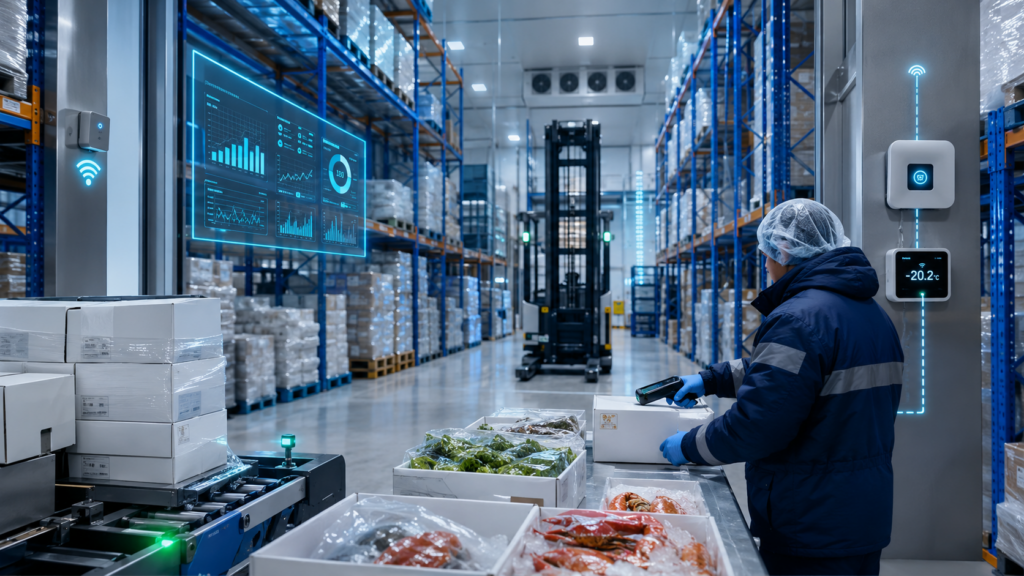
1. Cold Storage
Cold storage facilities are designed to store products at controlled temperatures. Chilled zones are usually around 0-8°C, while frozen zones can be lower than -18°C, depending on the product type.
A reliable cold storage facility should also follow food safety standards such as GMP, HACCP, and ISO. These standards help reduce contamination risks and support safe food distribution.
2. Cold Transport
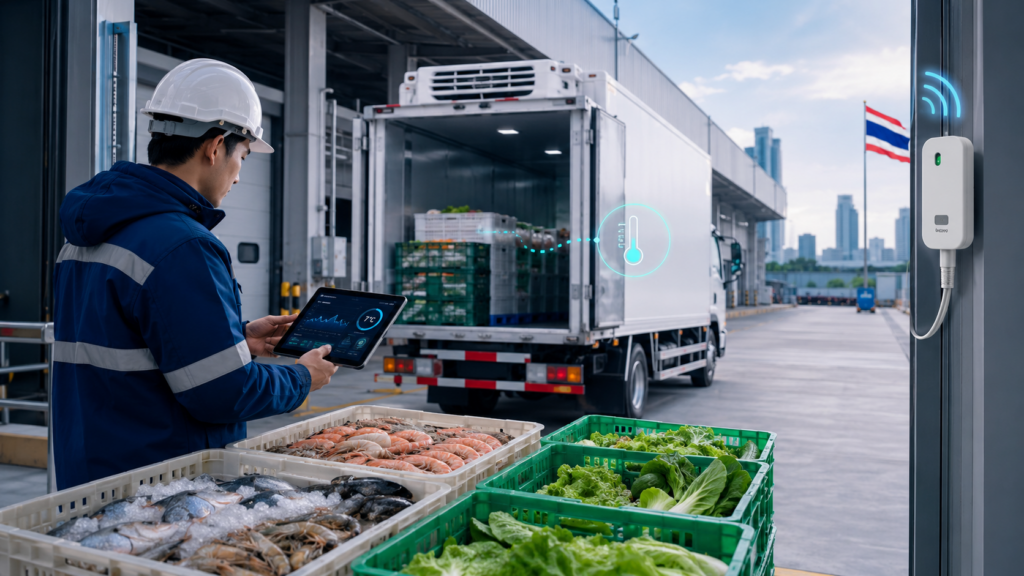
Cold transport uses temperature-controlled vehicles or containers to move products safely from factories and warehouses to retailers, modern trade, and end customers.
With IoT sensors, businesses can monitor temperature in real time throughout the journey. This helps prevent temperature fluctuation, reduce product damage, and improve delivery reliability.
Smart Technology for Cold Storage
Modern cold storage is moving toward automation and digital control. Technologies such as AS/RS, WMS, Barcode, RFID, and IoT help improve accuracy and reduce manual errors.
AS/RS supports automated pallet storage and retrieval. WMS helps manage inventory using FIFO, track expiry dates, and reduce dead stock. Barcode, RFID, and IoT improve traceability from the beginning of the supply chain to the final delivery point.
Together, these technologies help food businesses reduce waste, improve productivity, and build stronger supply chain visibility.
Benefits for the Food Industry
Cold Chain Logistics in Thailand helps extend product shelf life, reduce food loss, and improve food safety. It is especially valuable for frozen seafood, fresh produce, and ready-to-eat products where freshness directly affects business performance.
Traceability is another key benefit. It allows businesses to track products across the supply chain and meet international standards required by export markets such as Europe, Japan, and the United States.
Cold Chain Logistics is more than refrigerated storage or transport. It is a complete quality management system across the food supply chain. By using Cold Storage, Cold Transport, WMS, Barcode, RFID, and IoT, food businesses in Thailand can reduce losses, improve safety, and compete more effectively in global markets.
Contact OGA International
Line Official: @ogagroup
Tel: 02-0258888
Website: https://www.oga.co.th